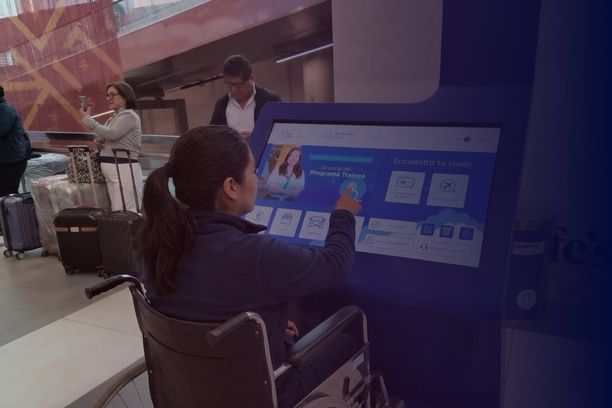
Airports are among the most complex public environments in the world. They bring together thousands of passengers, multiple stakeholders, strict security protocols, and constant operational pressure, all within vast, dynamic indoor spaces.
In this context, accessibility in airports is no longer a secondary consideration or a simple regulatory requirement. It has become a strategic priority. As passenger volumes grow and expectations evolve, airports must ensure that every traveler can move through terminals safely, independently, and with dignity.
Accessibility Is a Right, Not an Option
Accessibility means enabling every individual to navigate and experience a space autonomously, regardless of physical, sensory, cognitive, or situational limitations.
While airports have made significant progress with ramps, elevators, tactile paving, and audio announcements, many terminals remain difficult to navigate independently, especially for passengers with visual impairments or reduced mobility.
True accessibility goes beyond architecture. It includes access to information, digital services, communication tools, and intuitive navigation systems. An airport terminal that cannot be navigated confidently by all users is, by definition, incomplete.
From Static Signage to Intelligent Digital Wayfinding
Traditional wayfinding systems rely on physical signage such as directional arrows, static maps, and architectural landmarks. These elements are essential, but they are inherently passive. They provide general information without adapting to individual needs.
Digital wayfinding represents the next evolution of navigation in airports.
Powered by Indoor Positioning Systems and real time geolocation, digital wayfinding transforms the passenger journey from passive interpretation into active, personalized guidance. Much like outdoor GPS, indoor navigation platforms detect a user’s position and generate step by step routes throughout the terminal.
This shift from static signage to intelligent guidance has profound implications for inclusive travel.
Enhancing Accessibility Through Digital Wayfinding
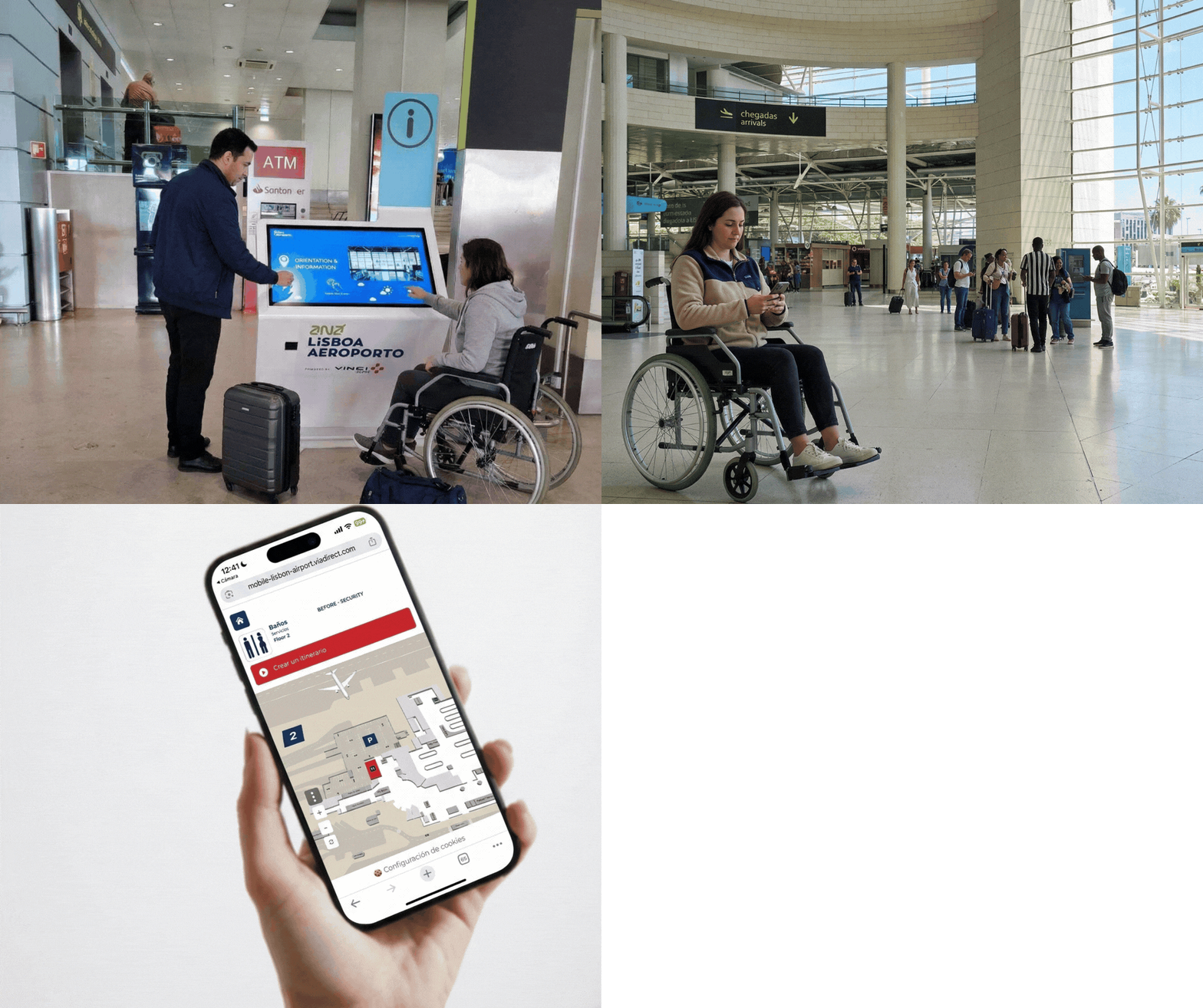
Digital wayfinding solutions allow airports to offer navigation experiences tailored to each passenger’s needs, combining mobile guidance with accessible on site infrastructure.
For passengers with reduced mobility, digital systems can generate optimized routes that:
- Avoid stairs
- Prioritize elevators and ramps
- Minimize walking distances
- Include accessible facilities and rest areas
These features improve both comfort and efficiency while reducing travel related stress.
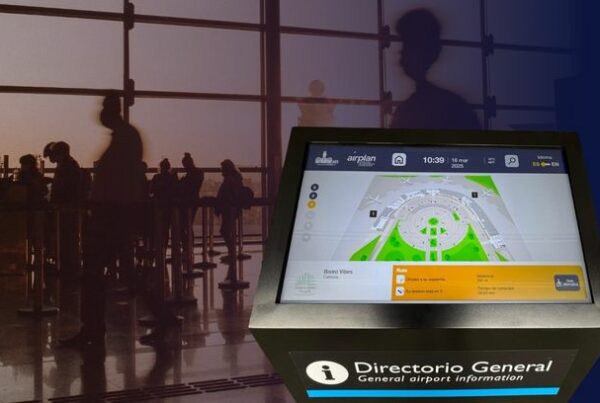
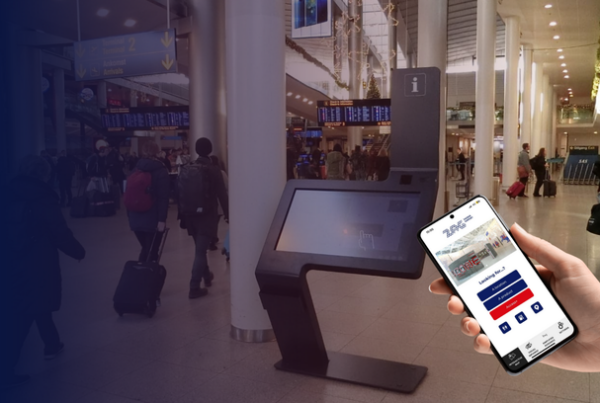
However, inclusive navigation cannot rely solely on personal smartphones. Interactive kiosks remain a fundamental pillar of accessibility in airports.
Strategically positioned throughout terminals, interactive wayfinding kiosks serve as visible, reliable access points for all passengers. When designed to comply with international accessibility standards, they become powerful inclusion tools:
- Screen height and tilt adapted for wheelchair users
- Interface zones reachable from seated positions
- High contrast display modes and clear typography for improved readability
- Simplified navigation flows to reduce cognitive load
These features ensure that passengers with disabilities can access the same routes, services, and information as any other traveler.
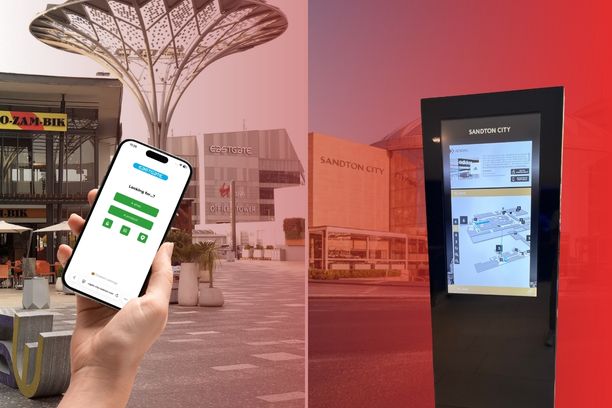
By combining mobile digital wayfinding with fully accessible interactive kiosks and mobile solutions, airports can create a seamless and equitable navigation ecosystem.
The Future of Accessible Airports
Accessibility today is multidimensional. It includes physical infrastructure, digital platforms, information design, and service strategy.
As airports continue to digitalize the passenger journey, accessible digital wayfinding is emerging as a cornerstone of inclusive air travel.
By integrating:
- Indoor positioning
- Mobile navigation
- Interactive kiosks
- Real time route guidance
…airports can transform complex terminals into environments where every passenger moves with confidence and independence.
At ViaDirect, we believe that accessible navigation is fundamental to building truly smart airports. Inclusive design is not an add on feature, it is the foundation of a seamless, human centered passenger experience.
Ready to Make Your Airport More Accessible?
If your airport is looking to enhance digital accessibility, improve inclusive navigation, or align with evolving regulatory standards, our team is here to help.
👉 Talk to our experts about building a truly accessible wayfinding strategy for your airport.
Let’s design inclusive journeys together.