Airports are complex, fast-moving environments where passenger experience, operational efficiency and commercial performance are closely linked.
Digital wayfinding has become a strategic tool to improve all three.
By replacing static signage with interactive, real-time solutions, airports can guide passengers more efficiently, reduce stress and unlock new revenue opportunities.
The Passenger Experience Challenge in Modern Airports
Passengers expect clear, intuitive and real-time guidance throughout their journey. When orientation is easy, travelers feel more confident, move faster and enjoy the airport experience more.
Digital wayfinding delivers:
- Clear, step-by-step navigation
- Real-time updates when conditions change
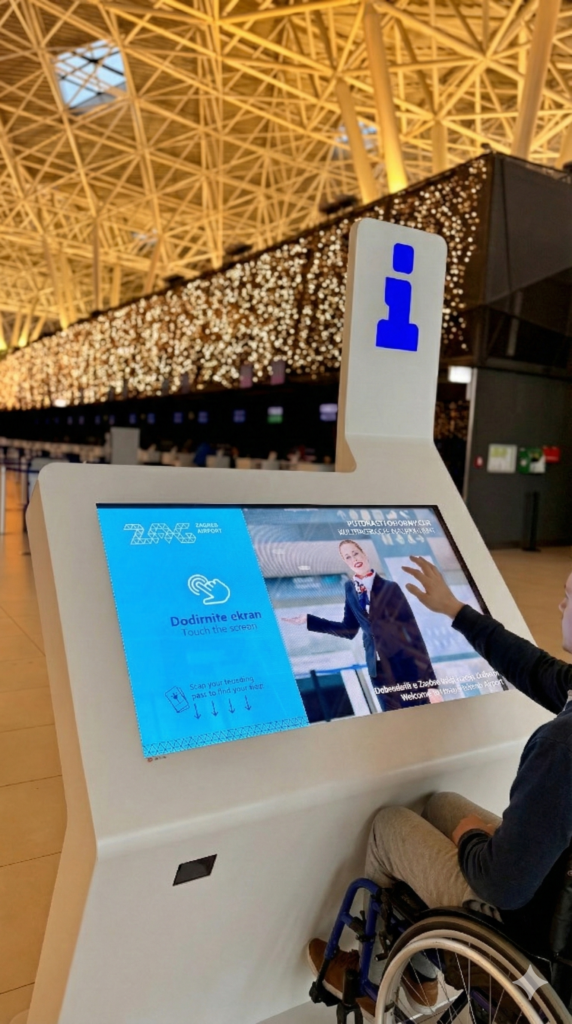
- Multilingual and accessible guidance
When wayfinding fails, stress increases, queues grow, staff are interrupted, and commercial opportunities are lost. On the other hand, well-oriented passengers are more relaxed, spend more time in retail areas, and rate their airport experience higher.
From Static Signage to Smart, Digital Wayfinding
Traditional static signage struggles to adapt to the dynamic nature of airports.
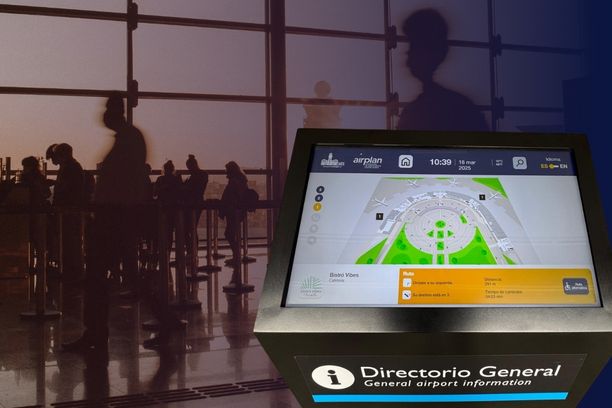
Digital wayfinding replaces it with flexible, data-driven solutions such as:
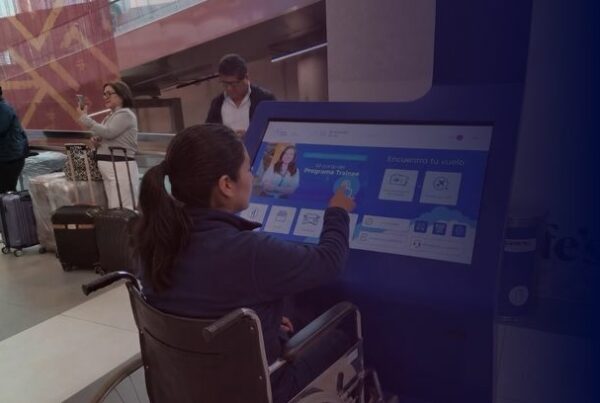
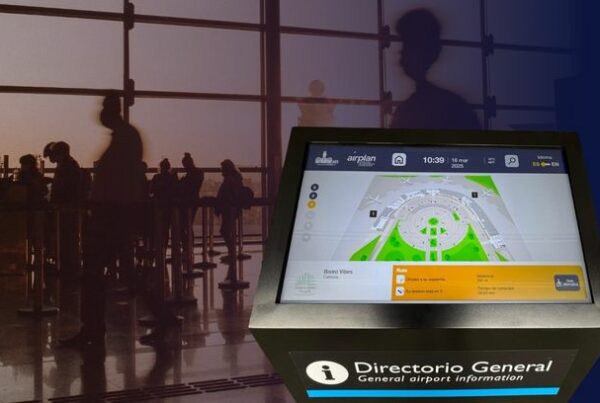
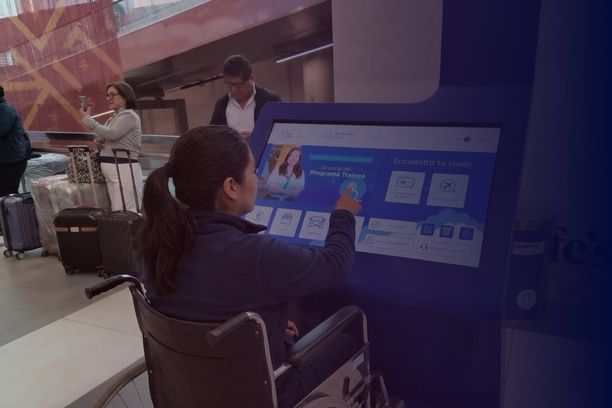
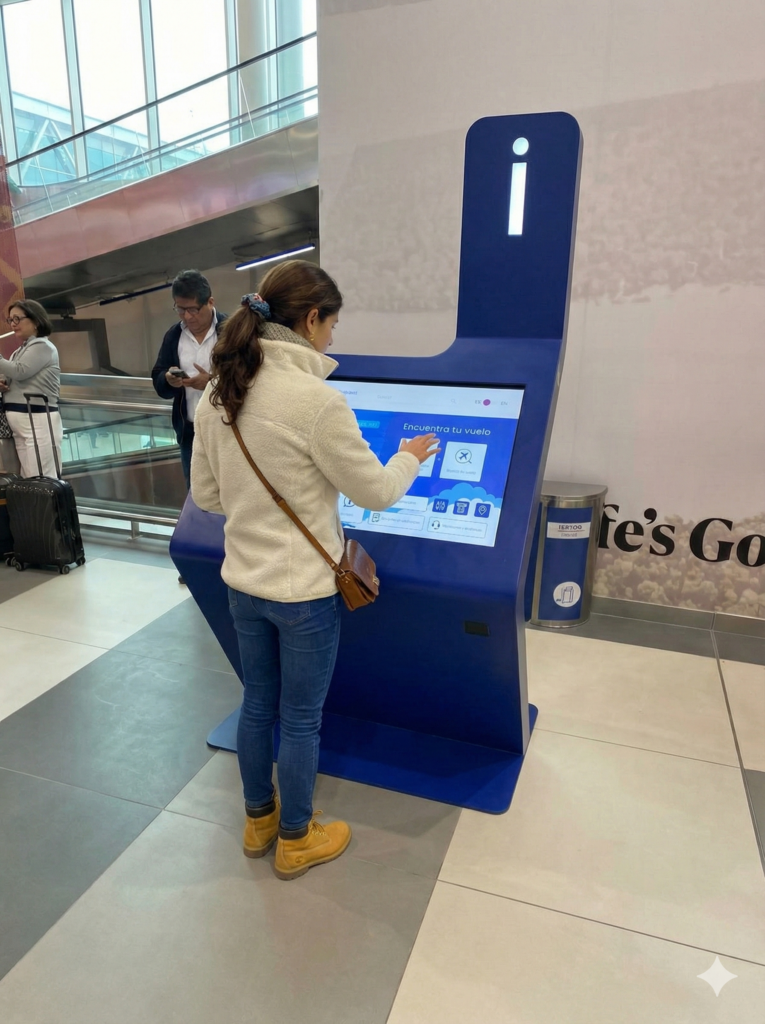
- Interactive wayfinding kiosks, designed for all passenger profiles
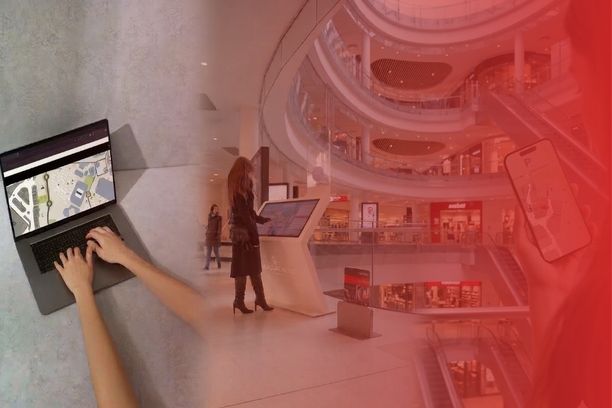
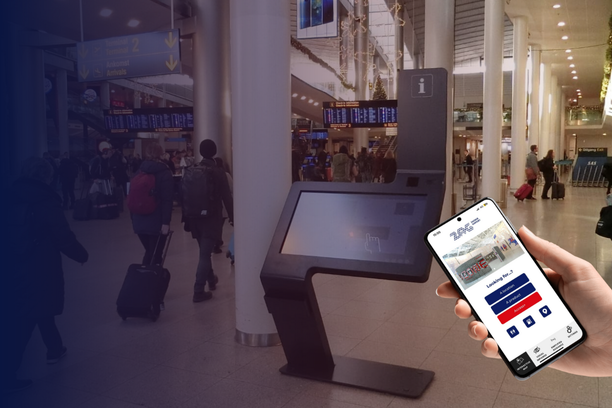
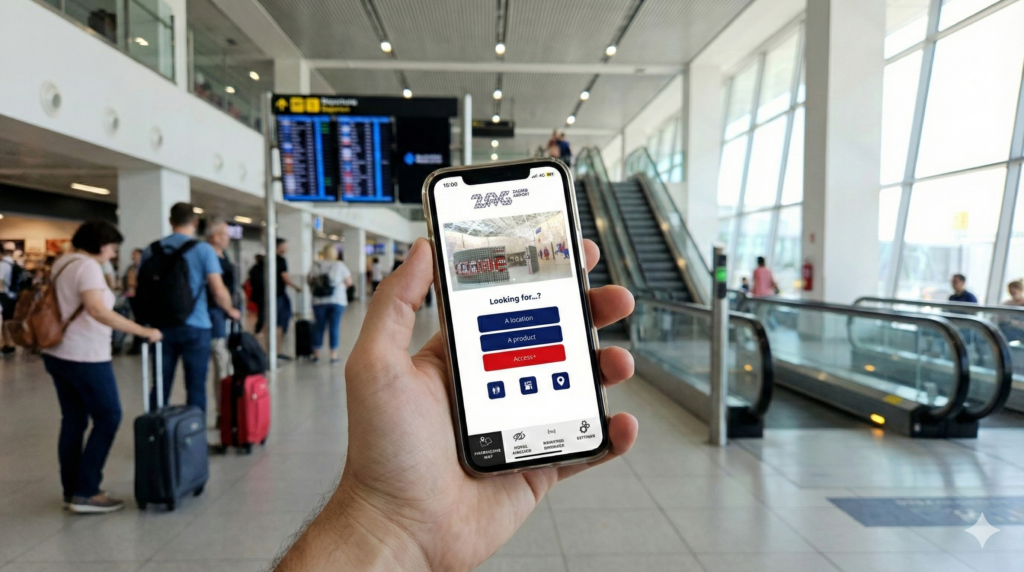
- Mobile wayfinding, accessible via QR codes or airport apps
- Real-time content updates, powered by flight data and terminal conditions
Together, these tools create a more responsive and intuitive navigation experience, supporting both passengers and airport operations.
Accessibility as a Core Experience Requirement
Inclusive navigation is no longer optional. Airports must support passengers with reduced mobility, visual impairments or language barriers.
With ViaDirect Access+, airports can offer:
- Step-free and accessible routes
- High-contrast and simplified interfaces
- Multilingual navigation across kiosks and mobile
Better Wayfinding, Better Operations and Revenue
Digital wayfinding goes beyond improving passenger experience — it directly impacts airport operations and commercial performance.
By guiding passengers more effectively, airports can:
- Reduce congestion and late arrivals at gates
- Lower the number of assistance requests to staff
- Adapt guidance in real time during disruptions or peak periods
With centralized content management, airport teams can update information instantly across all touchpoints, ensuring consistent and accurate guidance throughout the terminal.
At the same time, well-oriented passengers are more relaxed and more likely to explore the airport.
Digital wayfinding highlights shops, restaurants and services along the passenger journey, increasing dwell time and visibility for retailers.
Interactive kiosks and mobile maps become strategic commercial touchpoints, contributing directly to non-aeronautical revenue while supporting smoother operations.
A Strategic Asset for Modern Airports
Digital wayfinding is no longer just about directions. It is a strategic asset that improves passenger experience, operational efficiency, accessibility and revenue.
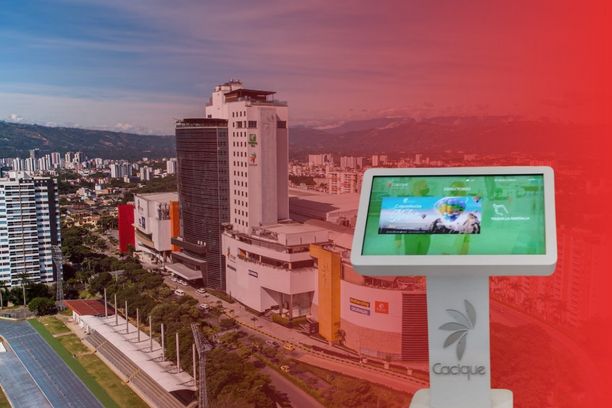
With proven airport deployments in Malta, Lima, Zagreb and Medellín, ViaDirect helps airports transform navigation into a smarter, more profitable passenger experience. To explore how these solutions could be applied to your airport, our team is available to discuss your challenges and share relevant case studies or a personalized demo.