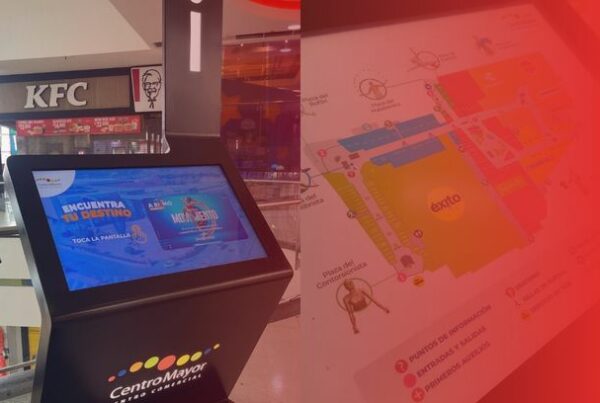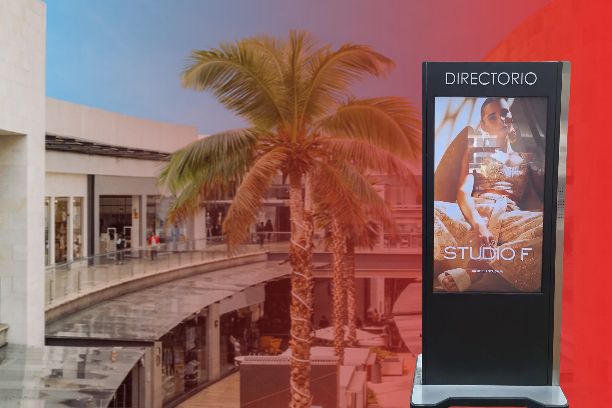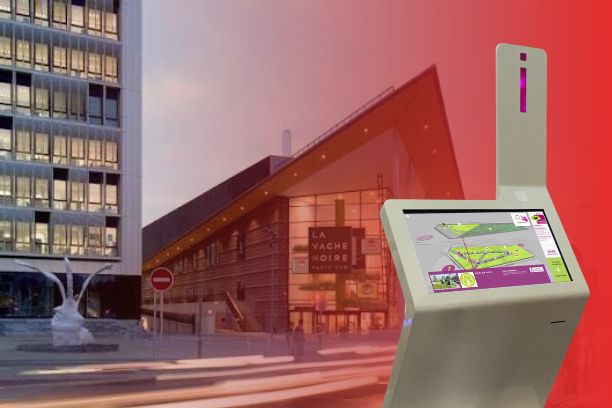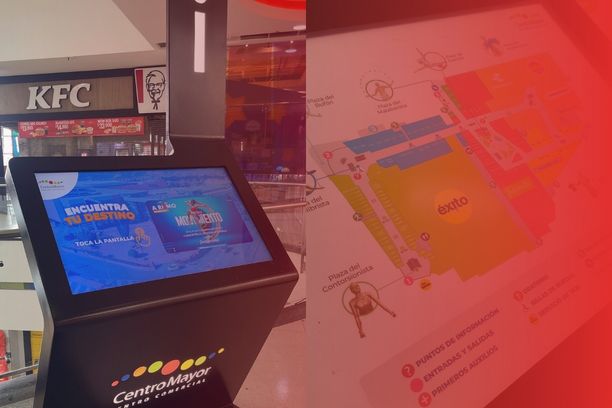
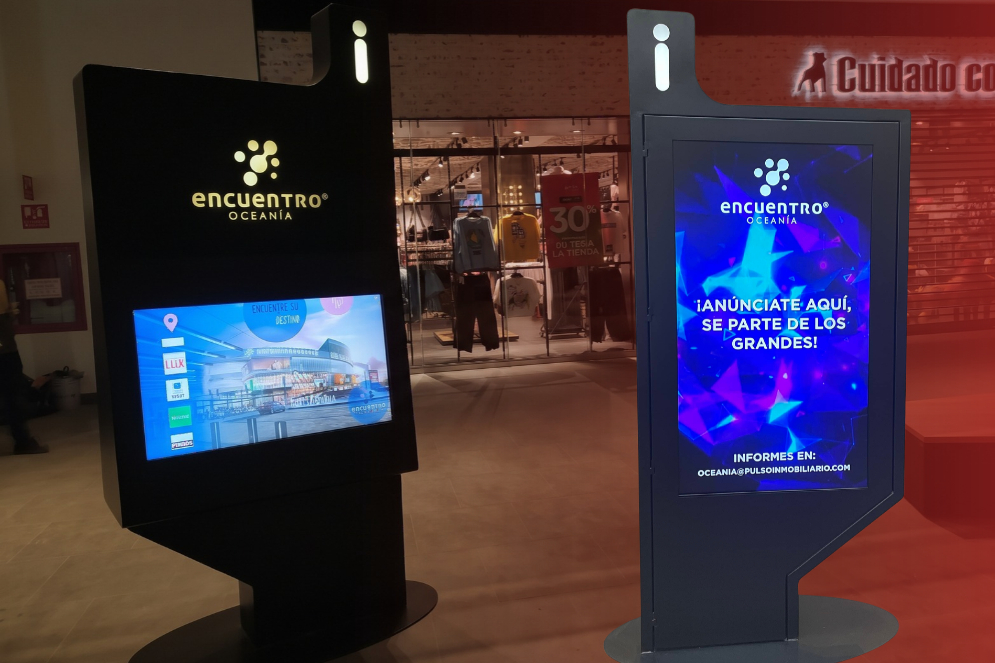
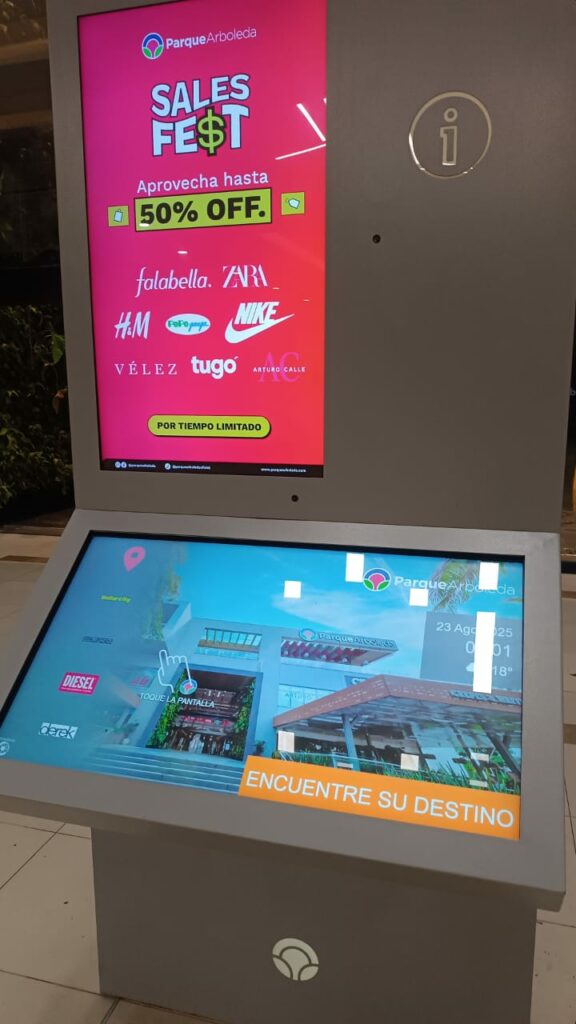
Interactive kiosks that combine indoor mapping and digital signage turn a wayfinding tool into a revenue channel. Visitors use them at the exact moment they decide where to go next, and that moment is what advertisers and tenants want to be part of.
For years, venue operators installed directories to help people find a store, a gate, a clinic or a lecture hall. The investment was justified by visitor experience, and it still is. But a screen that is touched by thousands of people every week, each with a clear intent, is also one of the most valuable pieces of media in the building.
The shift comes from two technologies maturing at the same time. Indoor mapping now gives venues accurate, searchable, always up-to-date maps with turn-by-turn routes. Digital signage gives them dynamic content that can be scheduled, targeted and measured. Brought together on one interactive kiosk, they create something neither can offer alone: advertising and promotion that are relevant to what the visitor is looking for right now.
What is interactive wayfinding signage?
Interactive wayfinding signage is a touchscreen kiosk that combines an indoor map, a searchable directory and a digital signage layer, all managed from a single content platform. It helps visitors find places and, at the same time, delivers promotional content the venue controls.
Three building blocks make it work:
- Indoor mapping: a digital map of the venue, with points of interest, floors, services and routes. It answers “where is it?” and “how do I get there?”, including step-free routes for visitors who need them.
- Digital signage content: images, video, offers, event announcements and sponsored messages that appear on the kiosk when it is idle, inside search results, or alongside the map.
- A content management platform and analytics: the software that updates maps and content across every kiosk, schedules campaigns and records how visitors use each screen.
When these three layers share the same data, the kiosk stops being a static directory. If a store changes its opening hours, the map and the promotion update together. If a campaign ends, it disappears from every screen on schedule. If a visitor searches for “coffee”, the kiosk can answer with the nearest options and a sponsored offer from one of them.
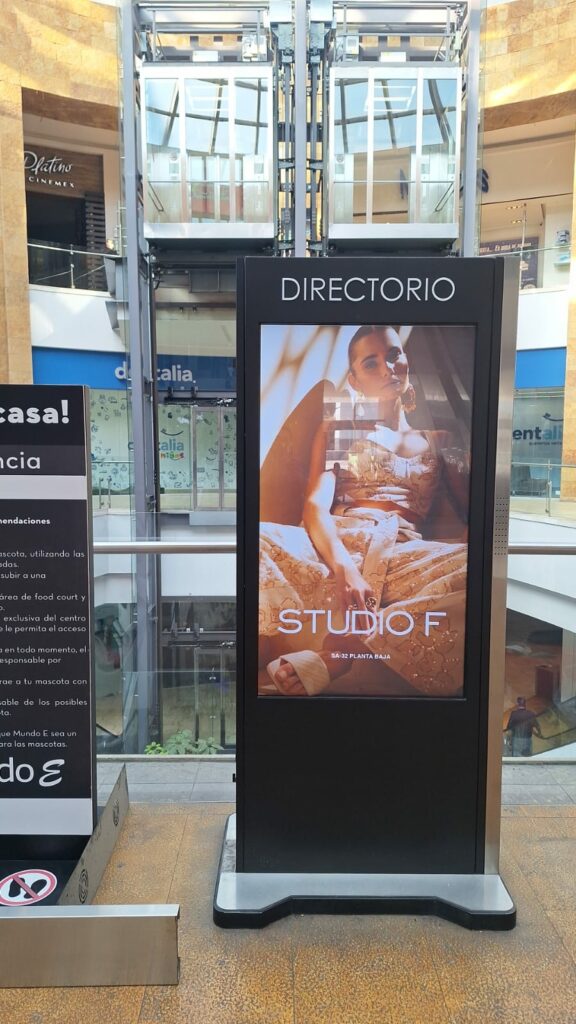
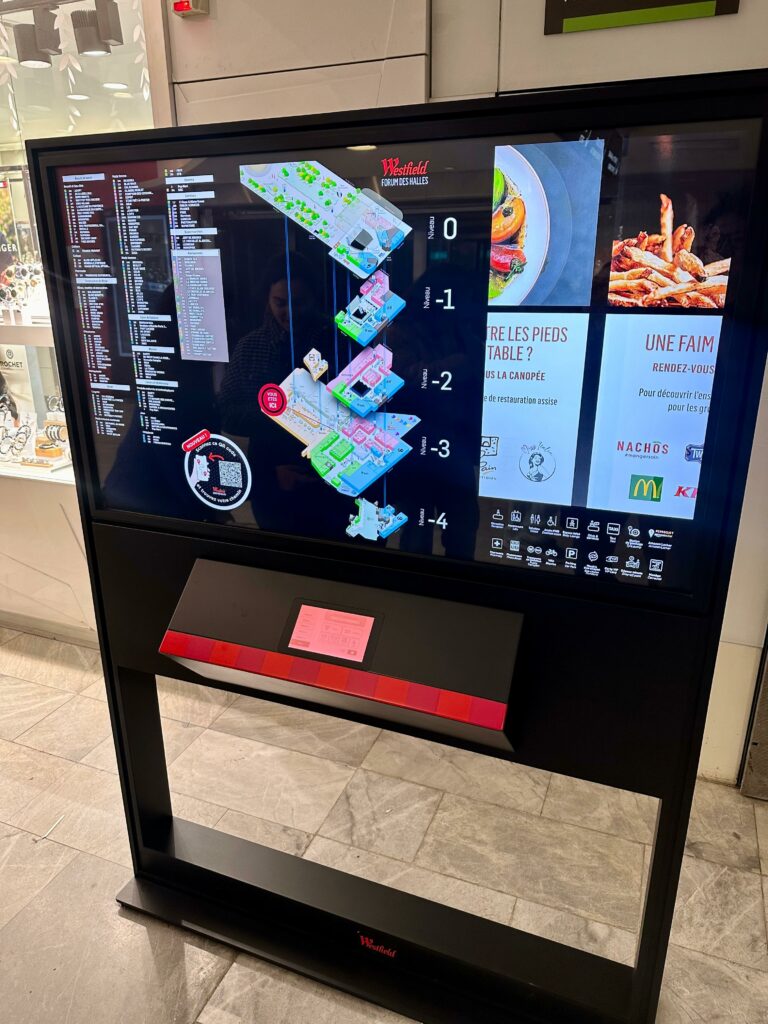
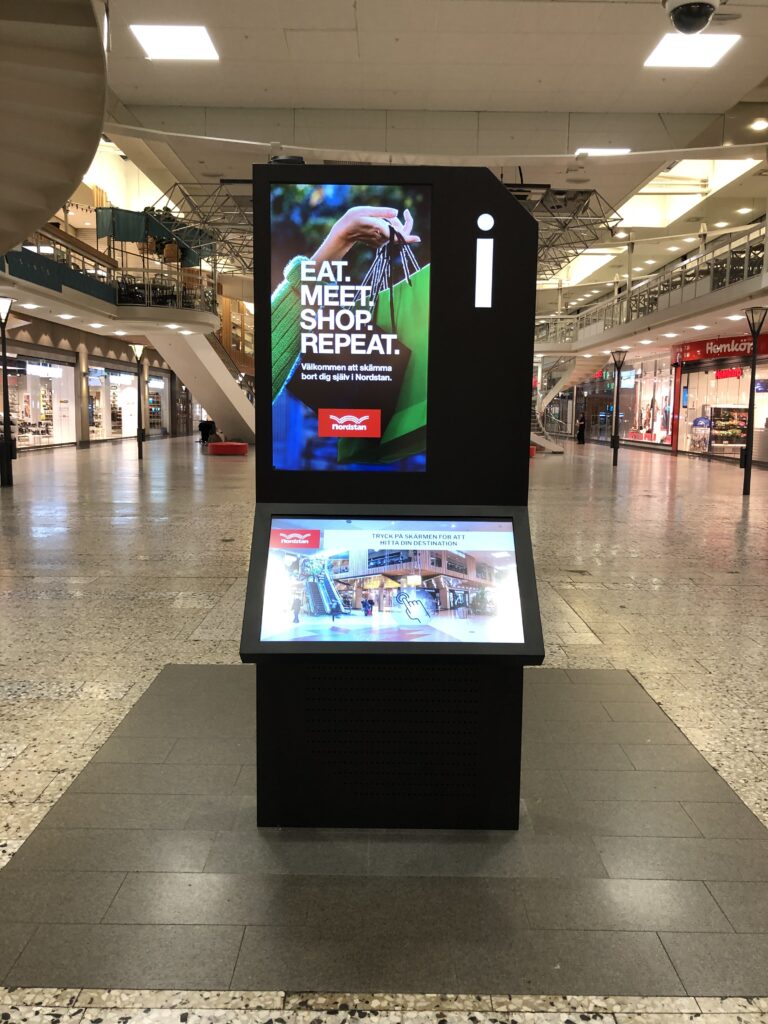
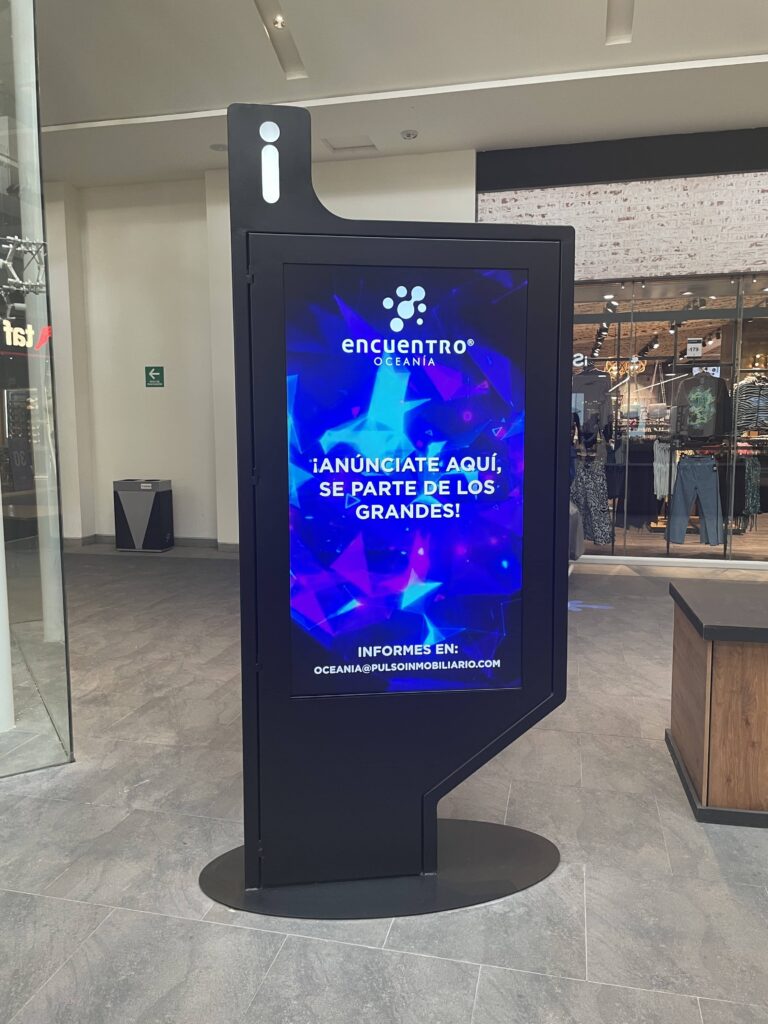
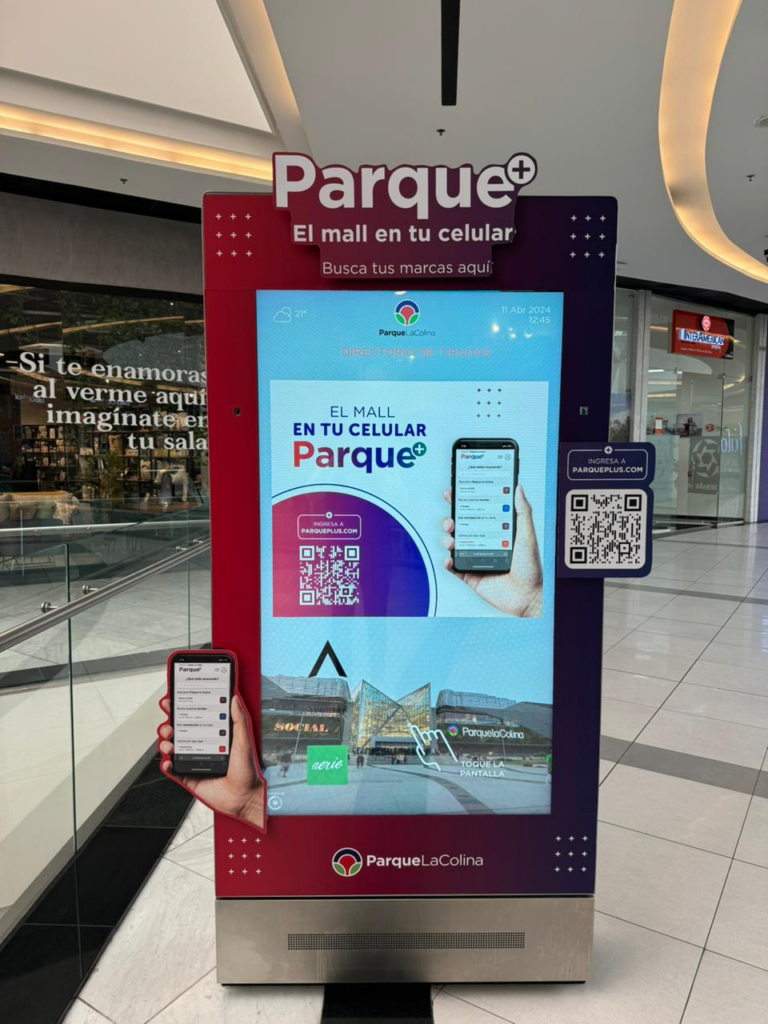
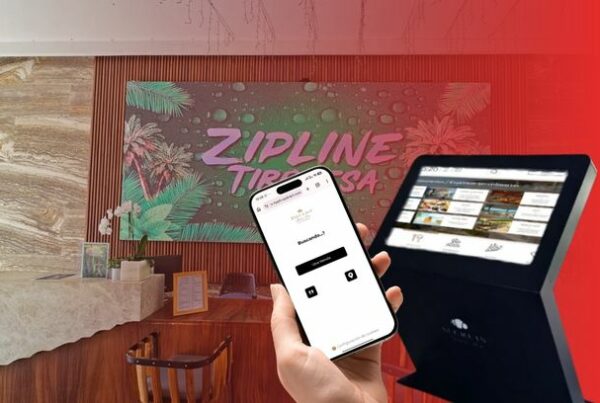
The experience can also continue beyond the kiosk. A QR code lets visitors take their route to their phone, so the journey carries on without installing an app. This is how ViaDirect connects its interactive kiosks with ViaDirect Mobile and ViaDirect Web.
Why the combination opens a new revenue window
The value comes from intent. A poster or a billboard competes for attention with everything around it. A kiosk visitor has walked up, touched the screen and typed or tapped what they want. Few other media in a physical space capture that level of intent.
This creates four advantages that standalone signage or a standalone directory cannot match:
- Relevance: content can follow the search. Someone looking for a pharmacy, a gate, a restaurant or a department sees offers and information connected to that need.
- Position: the screen sits where decisions are made, at entrances, junctions, food courts, terminals and hospital lobbies.
- Frequency: a good directory is used every day by new visitors and by regulars, so the inventory renews itself constantly.
- Proof: every interaction is recorded, so the venue can show advertisers and tenants what they received instead of estimating it.
For the operator, there is also a structural benefit. The kiosk is already justified by the service it provides, so monetization is an additional return on an asset the venue needs anyway, not a separate investment that must stand on its own.
How to measure return on investment
Revenue from a kiosk can be tracked from the first week, because the platform records what visitors do. The key is to define the indicators before launch and report them in a format advertisers understand.
The most useful metrics fall into three groups:
| Group | Metrics | What it tells you |
|---|---|---|
| Usage | Sessions per kiosk, searches, most searched categories, peak hours | Where and when attention is highest |
| Engagement | Taps on listings, promotion views, routes generated, QR scans | Which content and offers get a response |
| Commercial | Revenue per kiosk, occupancy of ad slots, renewal rate of tenant packages, cost per placement | Whether the model is profitable |
And the return on the investment is measured against the full cost of the kiosks, software, content operation and maintenance over the same period.
Two practical tips. First, report to advertisers with the same indicators you use internally: views, interactions and routes to their location. Second, review the data monthly and adjust placement and pricing, since the highest-traffic kiosks and time slots usually justify premium rates.
Best practices to launch without hurting the visitor experience
Monetization works only if visitors keep trusting the kiosk. These practices protect both the service and the revenue.
- Put wayfinding first. Search and routes must always be fast and obvious. Advertising should support the journey, never block it.
- Keep data clean. Outdated opening hours or wrong locations reduce trust and the value of every placement. Connect the platform to the venue’s tenant or facility data wherever possible.
- Design for accessibility. Step-free routes, readable contrast, adjustable height, screen reader compatibility and several languages widen the audience and are often a legal or tender requirement.
- Label sponsored content clearly. Visitors accept advertising when it is transparent and relevant.
- Create a simple commercial offer. Two or three clear tiers are easier to sell than a long catalog.
- Give tenants a self-service way to update content. It reduces workload for the venue and keeps offers current.
- Protect privacy. Use anonymous, aggregated analytics and follow local data protection rules, such as GDPR in Europe.
- Extend to mobile. A QR handoff keeps the visitor connected after leaving the kiosk and opens more sponsorship opportunities.
A practical rollout usually starts with a pilot on the highest-traffic kiosks, tests two or three of the seven models, and expands once the data shows which ones perform.
Turn your kiosks into a revenue channel with ViaDirect
Indoor mapping and digital signage on interactive kiosks give venues a service visitors value and a media channel advertisers and tenants are willing to pay for. Since 2009, ViaDirect has helped more than 450 venues in over 35 countries, including shopping malls, airports, hospitals and campuses, to guide visitors and make the most of every screen.